Virginia Memory, Library of Virginia
THIS PAGE HAS BEEN FORMATTED FOR EASY PRINTING

FEATURED COLLECTION

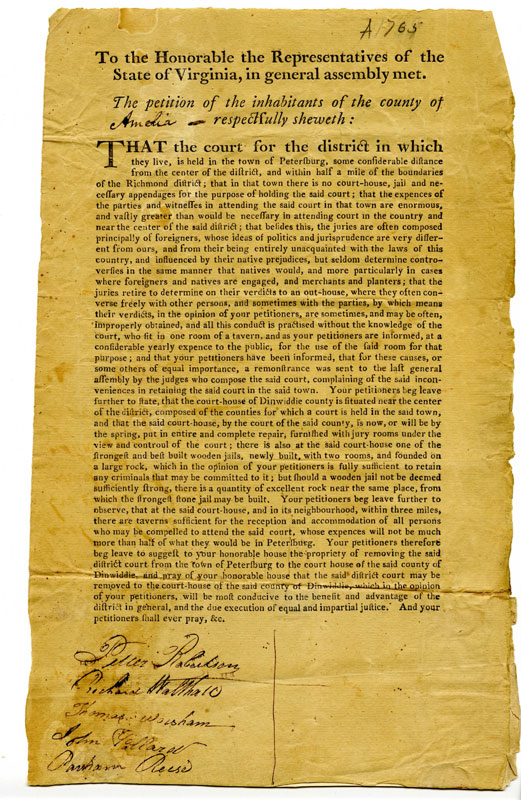
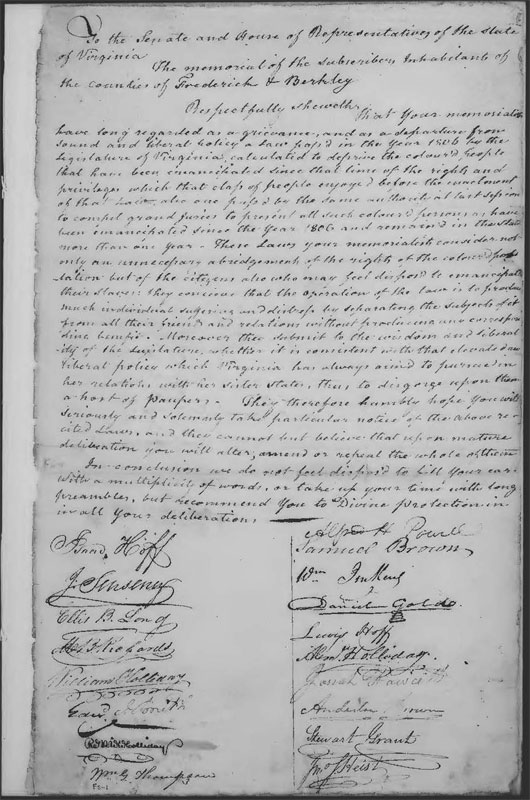
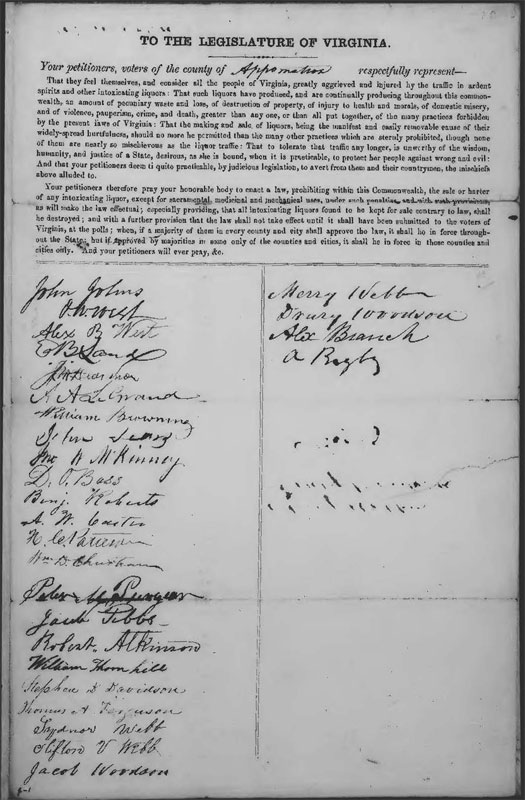
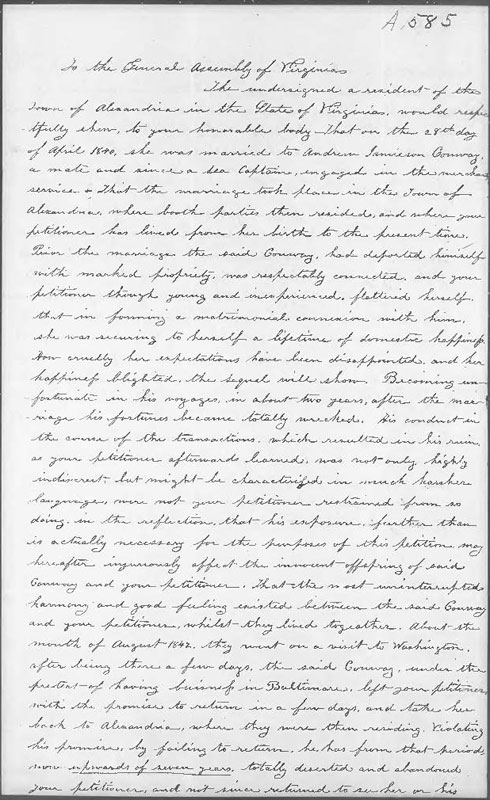
Letter from William Thomas Warren Taliaferro to Dr. John Taliaferro about life at the military academy at West Point. Caroline Co., Chancery Causes, 1787-1849, Admr. of J. Taliferro &c vs. Admr. of Dr. John Taliaferro, 1833-002. Local Government Records Collection, Caroline County Court Records. The Library of Virginia, Richmond, Virginia. Letter from William Thomas Warren Taliaferro to Dr. John Taliaferro about life at the military academy at West Point. Caroline Co., Chancery Causes, 1787-1849, Admr. of J. Taliferro &c vs. Admr. of Dr. John Taliaferro, 1833-002. Local Government Records Collection, Caroline County Court Records. The Library of Virginia, Richmond, Virginia. Plat. King & Queen Co., Chancery Causes, 1818-1913, Francis M. Morris &c vs. Vesta Ann Bulman &c, 1876-033. Local Government Records Collection, King & Queen County Court Records. The Library of Virginia, Richmond, Virginia. Letter from former slave in Liberia. Rockbridge Co., Chancery Causes, 1781-1958, Exr. of Hugh Adams vs. Legts. of Hugh Adams, 1860-065. Local Government Records Collection, Rockbridge County Court Records. The Library of Virginia, Richmond, Virginia. Broadside. Shenandoah Co., Chancery Causes, 1772-1927, F. S. Saum vs. T. J. Lindamood, 1895-424. Local Government Records Collection, Shenandoah County Court Records. The Library of Virginia, Richmond, Virginia. Plat. Lancaster County, Chancery Causes, 1722-1936, Clarke v. Clarke, 1852-005. Local Government Records Collection, The Library of Virginia, Richmond, Virginia 23219.
Images:

CHANCERY RECORDS INDEX

The Library of Virginia's Chancery Records Index (CRI) offers a glimpse into the everyday lives of Virginians over the centuries. While originally envisioned as a boon to genealogists, this unique indexing and reformatting effort has proven to be a wonderful resource for other types of researchers as well. Chancery court records are primarily testamentary and present a snapshot of the commonwealth, sometimes literally, that can inform how we view our ancestors. Plaintiffs, defendants, and deponents provided testimony in order to persuade the judge and these can provide a wealth of information on topics as varied as business partnerships; the slave trade; the rights of women; and marriage.

The practical importance of these records in our modern day lives should not be underestimated either. Present-day surveyors and title researchers sometimes need to refer to deeds or plats created as a result of a historical chancery suit to determine current legal boundaries. This reality highlights the fact that we are rarely very far removed from the past.

The CRI has also brought to light some very personal stories of our predecessors. In some cases, plaintiffs or defendants would submit personal letters, photographs, and other ephemera as evidence in a suit. Letters written from an army camp during the Civil War or a note from a former slave removed to Liberia simultaneously provide us with insight about the individual and his or her larger historical context.

While the CRI project has achieved its original objective of opening up a formerly underutilized resource for genealogists, it has also accomplished the unintended goal of providing a new resource to social and business historians, surveyors, and the casual researcher interested in the life experience of those who came before them.